The best alcohol-free red wine in the UK right now is the Cin&Cin FREE Cabernet Sauvignon. It is structured, dark-fruited and properly satisfying, with a depth that most alcohol-free reds do not come close to. That said, the full category has come a long way, and there are now seven options worth your attention depending on your budget and what you are pairing it with.
Red wine is the hardest style to get right without alcohol. The tannins, the body, the lingering warmth: alcohol plays a bigger structural role in red than in any other style. But the producers in this roundup have all worked to bridge that gap, and the results are considerably better than anything that was available even three years ago.
All seven bottles below are from the No&Low Drinks range. We have tasted all of them. This guide tells you what each one is actually like, which occasions it suits, and how to get the best from it.
In this guide
Why red wine is the hardest style to get right
If you have tried an alcohol-free red and found it underwhelming, you are not imagining things. Red wine is significantly harder to dealcoholise well than white or sparkling, for a straightforward reason: alcohol does more work in red.
In a conventional red, alcohol carries the tannins and provides body and warmth. Without it, the wine loses weight. The fruit is still there, the tannins are still there, but the overall impression is lighter and drier than its alcoholic equivalent. Some people find this refreshing. Others find it a little flat.
The producers who make the best alcohol-free reds understand this. Rather than trying to make an exact replica of a full-bodied red, they work with the grape variety and the dealcoholisation process to produce something that is good on its own terms: flavourful, structured and enjoyable alongside food, even if it is not quite the same as pouring a standard Cabernet.
With that in mind, here are the seven best options currently available.
The seven best alcohol-free red wines in the UK

Best overall
Cabernet Sauvignon · Germany · 0.0%
Cin&Cin FREE Cabernet Sauvignon — £11.49
This is the one we reach for most. Made from premium Cabernet Sauvignon grapes using a careful dealcoholisation process that preserves the natural tannins and dark fruit character, it pours a deep ruby red with purple reflections and opens with a classic bouquet of blackcurrant, ripe plum, dark cherry and a touch of spice. Medium-dry, smooth and structured, with a finish that lingers longer than most alcohol-free reds manage. 22 kcal per 100ml. Vegan.
The verdict: The most complete alcohol-free red in the range. Genuinely satisfying alongside food, particularly with red meat, pasta ragu or strong hard cheeses.
Pairs well with: char-grilled steak, lamb, pasta ragu, aged cheddar
Shop now →
Best for bold fruit
Zinfandel · California · 0.0%
Cero Zinfandel — £12.49
Crafted by Golden State Vintners in California, this pours a deep ruby with aromas of blackberry, black currant and strawberry. Semi-dry with soft tannins, a bold fruit-forward character and a subtly spicy finish. Zinfandel is well-suited to dealcoholisation because the variety brings so much natural intensity: even without the alcohol, there is a lot happening in the glass. Just 22 kcal per 100ml. Vegan.
The verdict: The fruitiest and most generous of the reds in the range. If you like American-style reds, this is where to start.
Pairs well with: grilled meats, BBQ, hearty stew, roasted vegetables
Shop now →
Best organic
Cabernet · France · 0.0%
Bellerive Bio-Organic Cabernet — £11.99
Made by the Pugibet family at Domaine La Colombette in France using certified organically grown grapes and without chemical treatments. This is a smooth, well-rounded alcohol-free Cabernet with a balanced profile and an easy-drinking character. The organic production and commitment to clean winemaking give it a particularly clean finish. It is lighter than the Cin&Cin FREE, which suits those who prefer a more delicate red style.
The verdict: The pick for anyone who values organic production or prefers a slightly lighter-bodied red.
Pairs well with: roast chicken, grilled vegetables, mild cheese, light pasta
Shop now →Exclusive offer
Get 10% off your first order
Join the No&Low list. We will send your discount code straight to your inbox.
No spam. Unsubscribe any time.

Best value
Red blend · Germany · 0.0%
Schloss Sommerau Alkoholfrei — £9.99
Produced by Peter Mertes, one of Germany's established wine houses, using vacuum distillation to preserve the character of a traditional German red blend. It is a consistent, approachable option with a balanced profile and a smooth, easy-drinking finish. Nothing here will surprise you, but at under a tenner it represents solid value for a properly dealcoholised red.
The verdict: The dependable everyday option. Good for stocking up when you want a reliable red without spending more than you need to.
Pairs well with: everyday meals, pizza, burgers, casual dining
Shop now →
Best for everyday drinking
Red · 0.0% · 750ml
Simply 0 Alcohol Free Red — £10.49
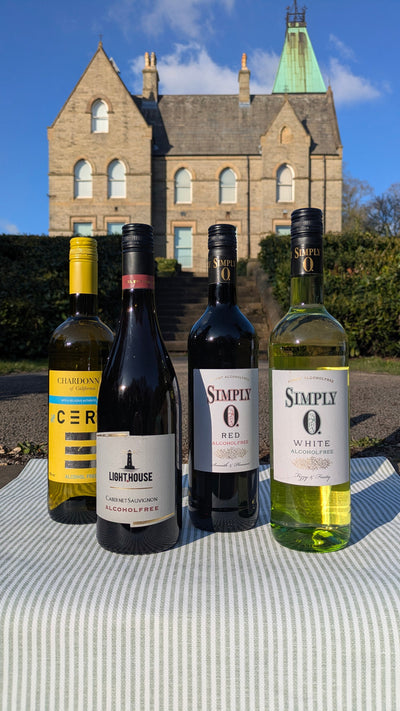
A smooth, easy-drinking alcohol-free red with deep dark berry notes and a velvety soft finish. Simply 0 does not try to be anything other than a pleasant, approachable glass of red, and it succeeds on those terms. The rounded, fruit-led character makes it comfortable on its own or alongside a straightforward meal. A practical and likeable choice for midweek drinking.
The verdict: No fuss, no pretension. Good for those evenings when you want something comfortable and uncomplicated.
Pairs well with: pasta, sausages, hearty soups, cheese on toast
Shop now →
Refined and structured
Cabernet Sauvignon · 0.0% · 750ml
Light House Cabernet Sauvignon — £11.49
Light House uses a specialist dealcoholisation method designed to retain the original aromas and structure of the wine rather than stripping it back. The result is a lighter, more delicate Cabernet Sauvignon with a clean profile and good balance. It is particularly appealing if you prefer a more restrained, food-friendly style over something more overtly fruity.
The verdict: Elegant and understated. Works well at dinner where you want something that complements the food rather than competing with it.
Pairs well with: roast lamb, duck, mushroom dishes, hard cheeses
Shop now →
Best halal and organic option
Cabernet Sauvignon · France · 0.0%
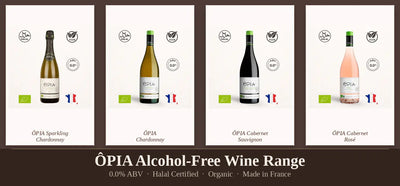
ÔPIA Cabernet Sauvignon — £9.49
ÔPIA is made in France from certified organic Cabernet Sauvignon grapes using a non-fermented grape juice base with carefully selected plant infusions to add structure and depth. It is officially certified both organic and halal, making it one of the few options available that is suitable for a full range of dietary requirements. The profile is clean and balanced, with a slightly different character from dealcoholised wines given the production method.
The verdict: The clear pick for anyone looking for a halal-certified or fully organic option. Also the most accessible price point in the roundup.
Pairs well with: grilled meats, couscous, tagine, mezze platters
Shop now →What to look for when buying alcohol-free red wine
Not all alcohol-free reds are made the same way, and the production method has a significant effect on the final result. Here is what to pay attention to.
Dealcoholised vs non-fermented. Most of the reds in this list are dealcoholised wines: they go through standard winemaking and then have the alcohol removed. The ÔPIA is different in that it uses non-fermented grape juice with plant infusions. Neither approach is wrong, but they produce noticeably different results. Dealcoholised wines tend to have more of the structure and depth associated with conventional wine.
The grape variety matters more in red. Because red wine dealcoholisation strips some of the body, starting with a variety that has high natural intensity gives the finished wine more to work with. Cabernet Sauvignon, Zinfandel and Merlot all tend to produce good results for this reason.
Look for 0.0% rather than 0.5%. Full dealcoholisation is technically harder and requires better equipment. Producers who commit to 0.0% are generally more serious about the finished product.
Price tends to reflect quality. The £10 to £12 range is where the best-value options live. You can spend less and get something drinkable, but the wines at the lower end of the price range are usually less complex.
How to serve alcohol-free red wine
Temperature. Serve at a cool room temperature, around 14 to 16°C. Warmer than this and alcohol-free reds can taste flat and overly sweet. If you keep your bottles at room temperature in a warm house, a short spell in the fridge (15 to 20 minutes) before serving will bring them to the right temperature.
Glassware. Use a standard red wine glass. The wide bowl lets you nose the wine properly, which is particularly important in alcohol-free reds where the aromatic complexity is one of the best things about them.
Food pairing. Alcohol-free red is at its best alongside food. The lighter body that comes from dealcoholisation, which can feel like a drawback on its own, becomes less noticeable when you are eating. Hearty dishes with umami depth are the best match: grilled meats, pasta with a rich sauce, mature cheese, roasted root vegetables.
Once opened. Reseal with the original cork or a wine stopper and refrigerate. Consume within two days. Alcohol-free wines do not have the same preservative effect as alcohol, so they deteriorate more quickly once opened.
Frequently asked questions
Does alcohol-free red wine taste like real wine?+
It depends on the bottle. The best alcohol-free reds, particularly the Cin&Cin FREE Cabernet Sauvignon and Cero Zinfandel, come close enough to be satisfying for most wine drinkers. The main difference is in the body and finish: without alcohol, reds feel lighter and end more abruptly. If you approach them on their own terms rather than as a direct substitute, most people find them considerably more enjoyable than they expected.
Is alcohol-free red wine good for you?+
Alcohol-free red wine retains the polyphenols and antioxidants found in conventional red, including resveratrol, without the alcohol and its associated health risks. It is also significantly lower in calories: most of the 0.0% reds in this list are around 20 to 30 kcal per 100ml, compared to around 85 kcal for a standard glass of red wine. Whether or not it has active health benefits is a matter for medical advice, but it is certainly a lower-risk option than the alcoholic equivalent.
Which alcohol-free red wine is best with food?+
The Cin&Cin FREE Cabernet Sauvignon is the best all-round food wine in this list. Its structured tannins and dark fruit work particularly well with grilled or roasted red meat, mature cheese and rich pasta sauces. The Cero Zinfandel is the better choice for barbecue and casual food, while the Bellerive Bio-Organic Cabernet suits lighter dishes like roast chicken or grilled vegetables.
Is there a halal alcohol-free red wine available in the UK?+
Yes. The ÔPIA Cabernet Sauvignon is officially certified halal as well as organic, and is available from No&Low Drinks at £9.49. It uses a non-fermented grape juice base rather than dealcoholised wine, which means it has never contained alcohol at any stage of production. It is also the most accessible price point in the range.
How long does alcohol-free red wine keep once opened?+
Unlike conventional wine, alcohol-free red does not have the preservative effect of alcohol. Once opened, reseal with a wine stopper or the original cork and refrigerate. Consume within two days for the best flavour. Unopened bottles should be stored in a cool, dark place away from direct sunlight and will keep until the best before date on the label.
Where to start
If you want one bottle to test the category, go with the Cin&Cin FREE Cabernet Sauvignon. It is the most complete option in the range and the one most likely to win over a sceptic. If you want something bolder and fruitier, the Cero Zinfandel is the one. For organic or halal requirements, ÔPIA is the answer.
All seven bottles are available now with UK delivery. Orders over £35 ship free.
Browse the full range